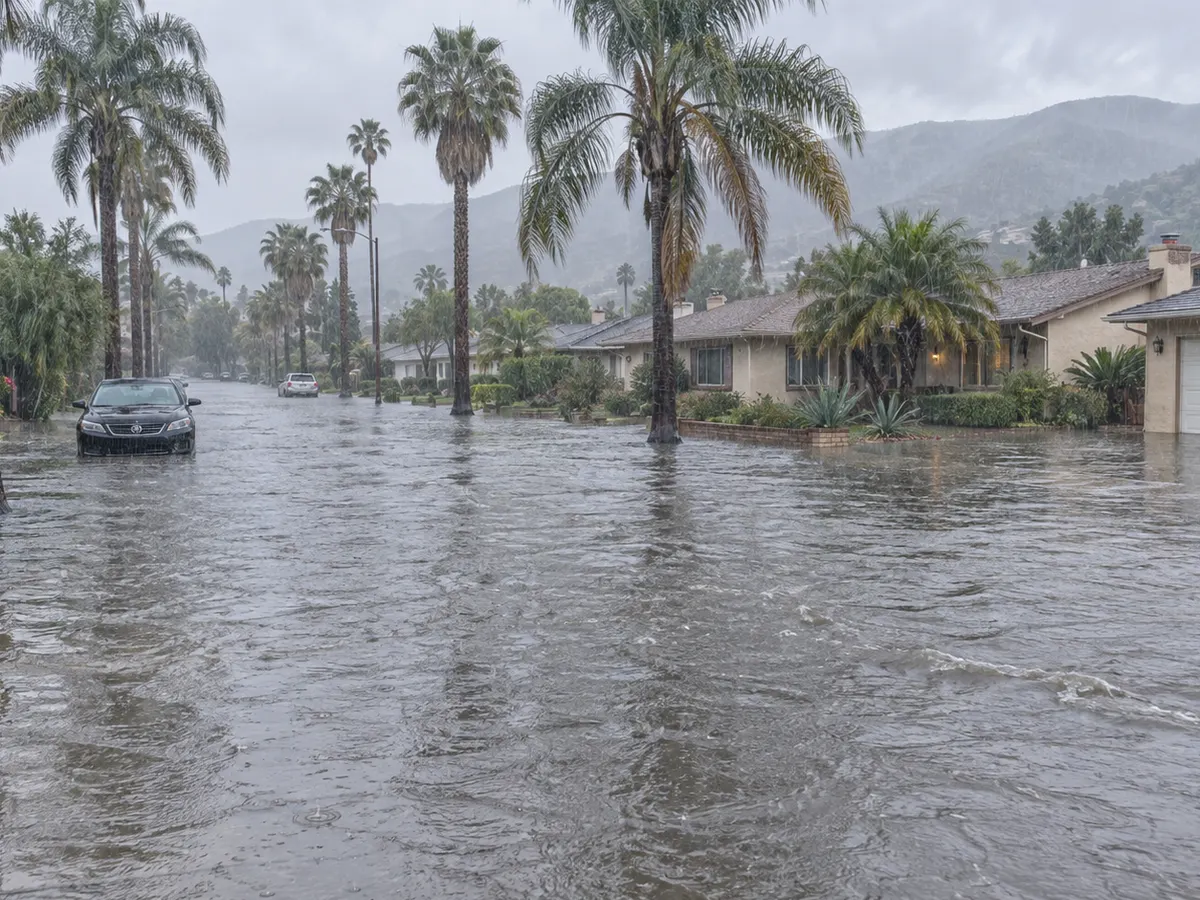
Cleaning up after storm water in San Fernando
The IICRC lists rising water from rivers or streams as an example of Category 3 water, while storm water is not automatically Category 3; the restorer decides after inspecting[IICRC 2026 position statement]. Either way, floodwater calls for protective gear and removal of materials it soaked.
FEMA advises removing drywall and insulation that floodwater touched and photographing all damage first[FEMA]. In a San Fernando home, that usually means a flood cut along the walls, removal of wet flooring and a full dry-out before anything new goes in.
How the job usually runs
- Wait for safe entry. Do not go back in until officials say it is safe[FEMA].
- Document. Photos and video of every room.
- Remove. Wet drywall, insulation and flooring come out.
- Clean and dry. Surfaces cleaned, then dried to verified readings.
Do
- Wear rubber boots and gloves[CDC].
- Keep children and pets out of flooded rooms.
Kitchens, baths, laundry rooms and garages
- Kitchen. Under-sink and dishwasher leaks hide under cabinets and flooring. Crews remove toe kicks to dry beneath them.
- Bath. Water from toilets, tubs and showers gets into the subfloor and wall bottoms. Drain backups count as Category 3 water[IICRC 2026 position statement].
- Laundry. A split washer hose can put water into several rooms. Washer discharge is contaminated water, not clean water[IICRC 2026 position statement].
- Garage. Water heater leaks spread on the slab and under the wall into finished rooms.
- Carpeted rooms. Carpet is extracted, and soaked pad is usually pulled and replaced.
- Ceilings and attics. Roof and AC drain pan leaks soak insulation and drywall. Keep people and furniture out from under a sagging spot.
When a leak is bigger than it looks
- Water has been sitting for more than a day, or you do not know how long it was there
- Carpet is wet across a room, or the pad squishes when you step on it
- Drywall is soft, stained or swollen at the bottom
- Water came through a ceiling or reached a second room
- The water came from a toilet, drain or the outside
- There is a musty smell after the surface has dried
Any of these usually means water has moved into materials you cannot dry with towels and a fan. A moisture meter will show how far it went.
The water damage restoration process in San Fernando
Most restoration work in San Fernando runs through the same six stages, whether the water came from a split supply line or a winter storm.
- Inspection and moisture mapping. Moisture meters and thermal cameras trace water under flooring, inside walls and in ceilings, and the crew confirms the source is stopped.
- Water removal. Submersible pumps take out deep water, and extraction units pull water from carpet, pad and hard floors. Mechanical extraction removes water much faster than air drying can.
- Removal of what cannot dry. Materials that will not dry in time are cut out. EPA guidance is that wet materials which cannot be thoroughly cleaned and dried within 24 to 48 hours should be thrown away[EPA flood cleanup guide].
- Structural drying. Air movers push air across wet surfaces while dehumidifiers pull the moisture out of the air. The EPA target is indoor humidity below 60 percent[EPA].
- Cleaning. Anything the water touched is cleaned. Items that cannot be disinfected, including wall coverings, cloth, rugs and drywall, should be thrown away, according to the CDC[CDC].
- Final readings. Drying is finished when the readings say so, not when the surface feels dry. Ask for the daily log.
Hidden water: the spots crews check first
Water moves outward under walls and cabinets instead of draining down. A leak in a hall bath can show up as a damp closet two rooms away.
The AC system is easy to overlook. A clogged condensate line backs up the drain pan, and the EPA says pans that do not drain can let water into the HVAC system[EPA]. Keep the pan clean and the line flowing[EPA].
Places to check:
- Inside walls around leaking or sweating pipes[EPA]
- Under vinyl plank, laminate and carpet pad
- Behind the refrigerator ice maker line and dishwasher
- Under the water heater and washing machine
- Roof materials above ceilings after a roof leak[EPA]
Watch for a damp smell, baseboards that swell, stains that grow, floors that cup or buckle, and a water bill higher than normal. LADWP also suggests a dye test in the toilet tank to catch silent leaks[LADWP].
How long drying takes in San Fernando
Small leaks found early dry in days; whole-house floods take longer, and the EPA says the drying-out process after a flood could take several weeks[EPA flood cleanup guide]. Either way, the work should start within 24 to 48 hours[EPA].
Dry outdoor air is not the same as a dry wall. EPA guidance is to ventilate when outside air is cold and dry and to dehumidify when it is warm and humid[EPA], and the inside of a wet wall cavity or carpet pad still needs moving air and dehumidification to dry in time.
Keep the equipment on and in place. Each time it is turned off, the air in the room gets damp again and drying slows down.
When the rain comes all at once in San Fernando
Most Valley rain falls in a handful of winter storms. In February 2024, the National Weather Service recorded 4.10 inches at downtown Los Angeles on February 4 and another 2.93 inches on February 5, with 12.66 inches for the month, more than 9 inches above normal[NWS Los Angeles].
In heavy rain, the common entry points are roofs, skylights, window and door frames and garage thresholds. Ceiling water is the one to move on fast, because wet insulation and drywall above you add weight.
Keep people out from under a bulging ceiling and away from wet light fixtures, and photograph the damage before the crew starts[FEMA].
After the drying equipment leaves
Ask for a copy of the final readings and keep them with your damage photos. In the weeks after, watch for a damp smell, new stains or swelling floors. Fix the source for good; the EPA is clear that the water problem must be fixed or it comes back[EPA].
Flood cleanup and San Fernando homes
In the city of San Fernando, 73% of the 6,613 housing units are detached houses and 17% are apartments, condos or other multi-unit homes; owners live in 62% of occupied units[U.S. Census Bureau]. 83% of homes in the city of San Fernando were built before 1980 and the median year built is 1956[U.S. Census Bureau]. At that age, original galvanized or copper supply lines, cast-iron drains and older shut-off valves deserve a look.
The City of San Fernando runs its own water and sewer utilities, separate from LADWP. To report a leaking or broken water meter or a broken water main, call Public Works at (818) 898-1293; after hours and on weekends the city lists (818) 898-1267[City of San Fernando].
Other services in San Fernando
- Water damage restoration in San Fernando
- Sewage cleanup
- Burst pipe water damage
- Crawl space water removal